


Urologic Surgery
Gennaro Musi
-
-
 02-57489.746
-
02-94379.229
-
Secretary email
-
HIGHLIGHT
The Division of Urology is concerned with the treatment of all urological tumours, including prostate, bladder, kidney, testis and penis cancer.
We had a great development of robotic surgery, as it was the more frequent surgical treatment for prostate cancer.
Our Activities
The Division of Urology is concerned with the treatment of all urological tumours, including prostate, bladder, kidney, testis and penis cancer.
Every year more than 1500 patients are admitted for surgical treatment and the number is increasing. Among these we performed both endoscopic, open and robotic surgery. Special attention is given to minimally invasive surgery in order to reduce the impact of surgery, while maintaining a high standard of effectiveness.
The Division has made a great development of robotic surgery, as it was the more frequent surgical treatment for prostate cancer.The oncological results with a medium follow up of 34 months are similar to the open radical prostatectomy; however, the main advantage of this surgical technique is the shorter time required to reach urinary continence and sexual potency, and the better overall outcome for both functional domains, comparing to the open surgery. Accurate follow-up procedures, following international guidelines, are strictly observed.Moreover, Robotic Surgery offers better perioperative outcomes: blood loss, catheterization, surgical time
-
Our staff
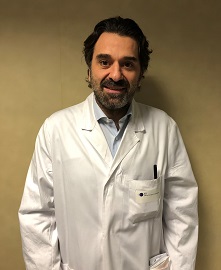
Staff Urologic Surgery
-
- High specialized physician Antonio Brescia
- High specialized physician Deliu Victor Matei
- High specialized physician Giovanni Cordima
- Physician Chiara Vaccaro
-
- Physician Elena Lievore
- Physician Ettore Di Trapani
- Physician Francesco Alessandro Mistretta
- Physician Luca Sarchi
-
- Physician Matteo Fontana
- Physician Mattia Luca Piccinelli
- Physician Sara Nardini
- Physician Stefano Luzzago
-
-
FURTHER ACTIVITIES
In 2013, 1622 patients were admitted for surgical treatment. Among these we performed both endoscopic, open and robotic surgery. Among open procedures the division performed 6 radical retropubic prostatectomies, 21 radical nephrectomies, 3 nephron sparing procedures and 61 cystectomies. Of these procedures, 43 were with urinary reconstruction. We had a further increase of robotic surgery, with 503 robotic assisted prostatectomies and 109 kidney surgery (49 robotic radical nephrectomies and 60 nephron sparing procedures). The division experience in urologic oncology was extended in all the items such as testis cancer and penis cancer. There were also performed urinary diversions for patients who underwent pelvic exenteration in other divisions.
Many patients underwent endoscopic procedures, like transurethral resection of bladder (380 patients) and ureteral stent insertion (81 patients).
The recent development of multiparametric MRI, which combines anatomical T2W images with functional techniques, such as diffusion-weighted MRI and dynamic contrast-enhanced, has significantly improved local staging of prostate cancer, and has shown the potential to influence the decision to preserve neurovascular bundles and the extent of surgical margins in robotic prostatectomy The intraoperative frozen-section procedure, which provides histological assessment of the surgical margin, is attractive as it enables the surgeon to intraoperatively demonstrate the oncologic safety of an nerve sparing radical prostatectomy procedure. In light of the promising results reported for mpMRI and IFS separately, we hypothesized that their combined use would improve the oncological outcome and functional results.
-
CLINICAL ACTIVITIES